Common Fate
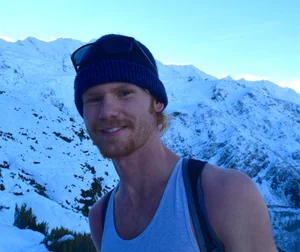
By Ryan Gossen
We turned onto federal land off Sugarloaf Road and the potholes began. A few hundred yards in, we realized we didn't have enough water and turned around and went back to the gas station in Nederland.
The second time, we stopped alongside the Class C motorhome to read the notice posted on its door: “Overstayed.” I watched for someone to peek their head out from behind a curtain while we idled. We almost bought one of these years ago and often talk about how we dodged a bullet. This van has been our second home for nearly a decade.
We started off down the potholed dirt road again and two dirt bikes appeared behind us. Neither rider had helmets. I pulled to the side to let them pass. They stopped ahead of us at the top of a hill and when we went by I gave them the wave, which one of the two returned. Everyone seems to have a different way of doing this, being out here.
The road went from bad, to not so bad, to sketchy, to if I had to turn around I’d be fucked.
———
I always drive. My wife has bad night vision and needs to recline the seat for her back to survive long road trips. Also, she is one of those drivers who, when you meet them at a two-way stop, will wait for you even if it's their turn. Her hesitation spoils the flow, the intuitive understanding between drivers that is what actually keeps us all from crashing into each other. It's the awareness of fish in a school, of birds murmurating over a lake. If she experiences this she does not trust it. I believe her hesitations endanger us. It sounds like a serious problem, but you can probably tell it's just a man who thinks his wife is a bad driver, so he drives. We both accept it. I accept my burden, she accepts my control needs.
I have anecdotes that explain my orientation towards cars:
My dad kept an old MGB convertible with a luggage rack I used to grip while pushing it. When Dad popped the clutch, I climbed over the rack into the passenger seat. He had two cassette tapes: The Oak Ridge Boys and The Bellamy Brothers. I still listen to them when I want to smell an old British sports car.
I had a neighborhood friend named Bryce who was six years older than me. When I saw him driving down my street, I jumped on his hood and grabbed the windshield wipers. He would speed around the block and try to shake me loose.
I’m aware of only one anecdote that represents my wife’s attitude towards cars:
When she was 17, she was in the passenger seat of a car that crashed on the highway on a winter night in Rochester, crushing two lumbar vertebrae. Her back pain is worse in winter, worse if she sits too long. It hangs like a black curtain in the periphery that will slide in to narrow the focus of her life if she does not manage it perfectly. She discovered swimming, anti-inflammatory diets. Pain signals can be blocked by heat, by cold, by the touch of a hand, but this pain is patient and waits for moments of stillness. She became a physical therapist. She bore and raised a child. She pushed out the curtain of joy to encompass a wide view.
If she is triggered by something, a close call on the freeway, an accident we pass on the side of the road, or a conversation that digs too deep into the source code of her fear, she issues driving instructions from the passenger seat, asking me to slow down and demanding a certain distance between us and the car ahead. It should be no big deal but I am annoyed, and the car gets quiet.
Teaching our daughter to drive is the opposite experience: I am in the passenger seat fighting for control of my terror. By focusing on my breath, I am sometimes able to attain enough acceptance of my death to speak calmly as she makes and recovers from a thousand little mistakes.
There is an algorithm that experienced drivers have and can recognize in each other that calculates the distance to an object and the rate of deceleration. We give the benefit of the doubt to almost anyone in the driver’s seat until they demonstrate themselves unworthy. At our current speed, when and how hard does the driver have to brake? Are they aware of the distance? And what about the person behind us? Are they modeling my driver’s mind in the same way that I am?
If it's the Uber driver, they may brake later than I would have but win back my trust by doing it more smoothly than I thought possible, with no bounce at the end that sends my head back into the headrest. I didn't understand because this person is just a better driver than me. I should relax. If it's my daughter, there will be a sudden jolt at the moment she realizes she is late, pulling my head forward, and then an awkward improvisation of conscious decisions that correct her previous solution. She is building an algorithm in her cerebellum and has yet to smooth it out. Everyone—passengers, the cars behind us—must recognize the nuances of her movements, be patient with this phase, and give her space.
The space between cars is not just physical but also emotional. You can tell how someone is feeling by how they drive. If they are drunk, demented, distracted, or filled with exuberant testosterone. Our car has a magnet that says:
PLEASE BE PATIENT
STUDENT DRIVER
to which I added a comma with a sharpie. It's still ambiguous, but I feel like it speaks more to the student now.
PLEASE BE PATIENT,
STUDENT DRIVER
I know that my patience here sets the bar for her patience with herself, but I must locate it through a tangle of my own fear. I try to be Alexa, I try to be Siri with a dad voice, but I can't keep it up. We get into the intersection and the pitch of my voice rises into first tenor range: “Ok, just move in there, right there, good, now look for the gap, ok… ok… ok go ahead. Go ahead. Go. Go now. GO! GO NOW!”
She is going to be a good driver. I can tell by the way she dances, the way she rollerskates. We are logging miles to build reflexes. She has to feel where the car is in front of her, feel the school of fish around her. It's a system that evolved and was not planned, and must be learned like a musical instrument.
Driving is totally insane and nothing like it could be introduced today, all at once, in its current form. Legalizing Schedule I narcotics would make more sense and be less dangerous.
I’d like to give her a set of rules that will keep her safe, but the simple act of perceiving an individual car in an intersection is more than I can describe. How does one pick through the information coming from one’s retinae and say, this is a car, this is another car, this is the road, this is a tree? This visual grouping activity is called “Gestalt.”
One hundred years ago, Austrian psychologists articulated basic principles that describe how we identify objects in a field of visual stimuli. There is the Law of Continuity, which states that a line that disappears and re-emerges may be part of the same line. The Law of Symmetry holds that objects tend to be balanced around a center point. My favorite law, the Law of Common Fate, states that things which move together are part of the same thing. This is the most powerful grouping principle and can override all the others.
If you looked down from space, you could see my wife and I are part of the same thing because we move isometrically and independently of everything around us. My daughter moves at a distance now, since she has left home, but in my mind’s eye, she is still grouped with us in the same gestalt. I try to maintain an awareness of her, but I can only remain aware of who she was when she left.
———
My wife and I followed the dirt road over the rise and around the corner beyond the hill, passing spots that were occupied. It wasn't dark and we didn't have the fear of being lost in the wasteland. We have been doing this together a long time. We have slept in vehicles in places one is not supposed to sleep. Sometimes a national park campground is sketchier than a Walmart parking lot. It's all about being there on the weekdays and having some space.
The road narrowed. If we encountered a vehicle going the other way, someone would have to back up. We passed a perfect spot that was taken, another, and then the road went left and dropped into a tilted corner that was deeply gouged with erosion. I might have backed up, but I maneuvered around the high side, letting my left wheel brush across the empty space, then braked against the far side of the rut. After that, it was just a matter of getting the 18 feet of van down the steep part and there at the bottom was a lovely plateau, overlooking the valley cut by upper Boulder Creek, invisible in the pine-filled canyon. We listened like it was a band we loved playing in a club we didn't want to go inside, as we watched the sunset and ate dinner. I knew what had to happen the next morning and I dreamed about the road and the van tipping over.
As far as fears go, it was a fine, organic, physical fear. Not a decade-long anxiety about an IRS audit or a permanent apprehension that I am not quite OK as a person for some reason. That I'm bad at school, or don't have enough money, or a sense that everyone who knows me is ambivalent about me. It was not the fear that life is ultimately meaningless, or that I, as a thing, am not myself but an emergent reflection of the environment and various reflexes, incapable of fulfilling any expectations of meaning and doomed to expire in the near future anyway. It was just the knowledge that, tomorrow morning, after a cup of coffee and yogurt with trail mix, I would have to somehow goose the van up around the corner, avoiding the system of ruts on the right, which could cause the van to tip past the point of no return.
My wife walked off to sit on an escarpment with her coffee and I walked up the hill, looked at it from a few angles and scuffed at the dirt. It had rained at night and the dirt was damp and held together better than if it was dry and loose. I should get as much speed as possible to gain the high side of the corner, with the left wheel in the grass. Too much and I'd bottom out on the bulge, not enough and I'd slide into the rut, tilt back, spin out my high side wheel and teeter into physics that would change more fundamental aspects of my life.
My wife stood above the road in a place where she could call out the locations of rocks in case my plan went awry and I had questions. I put my coffee in the deep drink holder and rolled down the windows. My normal loose, spontaneous driving mode, the mode in which I can thread around semi’s, honk at someone drifting into my lane, listen to a podcast and eat a sandwich is what I needed right then, but I gripped the wheel with both hands, my mind busy modeling consequences. I tried making the part of my mind that makes trouble think about my breath, sometimes that works. The right wheel boomed into a rut and a reflex told me to slow down, but this was where I needed more speed so I pushed the pedal down and got the left tire into the weeds. There was some spinning and I felt the crest of the hill pass under me as the van calmed down and I parked on flat road.
The drawers from the small cabinet had thrown themselves hysterically across the van and our clothes, snacks, headlamps were distributed like snow in a snowglobe that had been shaken and set down. A few drops of coffee sat on the surface of the tumbler. I got out and looked under the van. Something was dripping from the shocks, just water from a puddle. The rest of the day was easy, and a little boring. We tried to plan for more hiking and climbing days in the future. It's easy for these trips to turn into just driving.
Ryan Gossen is a writer living in Austin, Texas, where he also pursues dance, Brazilian Jiu-Jitsu, and climbing, and is an active member of Texas Search and Rescue. He has had many vocations, including user experience (UX) designer, experimental psychologist, construction worker, arborist, and ski bum. He writes mostly about man’s interaction with nature. More of his writing can be found on his website.