The Meaning of Water Skiing
By Teddy Dondanville
I’m hydroplaning over rippling water on a slalom ski. My feet are stacked one behind the other, right behind left, stuffed inside rubber bindings bolted into the ski. I’m desperately holding onto a tow line that runs to the back of a powerboat 75 feet in front of me. I use my back foot like a rudder to steer right and left, assessing how the ski feels beneath me. Then, once I’m warmed up, I push myself outside the wake, and I lean hard onto the ski's outside edge. As I do, my ski slices through glassy water like a laser beam, a rooster tail of water is exploding out from behind it. As the rope comes taut at the apex of my turn, I use the momentum it generates to slingshot back inside. I compress as I travel over the V-shaped wake, then dump my body weight back again, away from the boat, to begin another carve.
This time, something about my body positioning and timing is off, and a few extra inches of the ski’s edge catch the water. It’s enough to knock me off balance and send me catapulting into the water at 33 miles an hour. Recovering, I lie on my back, blinking the water from behind my eyeballs and purging my sinuses through my nostrils like a whale’s blowhole. My head pounds, and my shoulder feels funny.
After a hard wipeout, the pessimism and the absurdity of water skiing get to me. Lying there, I wonder why in hell I practice this sport, one that injures me the second I do something wrong.
Voluntarily get dragged behind a powerboat? Why? What's the point?
When I feel this way, I struggle to understand the point of water skiing. I feel like a nihilist, an adherent to the philosophical idea that nothing in life, including water skiing, has intrinsic meaning, and that nothing matters. After all, water skiing is a time suck that requires a lot of free time and money to enjoy. Not to mention, it can kill or seriously maim you if something goes awry.
Fortunately, most of the time, I find that perspective exhausting. I find it so much more invigorating to imbue water skiing with an intrinsic value. When I do, the significant impact the sport has had on my life comes into focus.
Water skiing was my first foray into water sports. It was a family affair. My mom taught me. She floated in the water next to me and coached me into the proper starting position. My dad was the boat captain, and my sister operated the red flag, signaling to other boats that a skier was in the water.
“HIT IT,” I yelled with my little voice, over and over again. Most times, the ski rope would explode from my hands. Other times, my skis would nose-dive, and I would plunge forward. The failure was exhausting, and frustration welled up inside of me. All the while, my mom floated there, patiently making corrections. Eventually, I got up. I was flying! My skis slid over the water, and the warm sun dried my wet skin.
We skied a lap and did a U-turn to go back and pick up my mom. It was exhilarating. Liberating. But the best part was the smile on my mom’s face, gleaming above the surface of the water as she gently bounced up and down in the boat's wake like a fishing bobber.
But my memories of waterskiing aren't all good. On one busy holiday afternoon, it was my sister's turn to ski. After getting up, she struggled to keep her balance in the choppy water. She wiped out, and we all giggled. But then, as we came around to pick her up, another speedboat came in way too close.
“HEY, HEY, HEY!” my mom screamed, desperately waving the red flag and pointing toward my sister. But they didn’t see or didn't hear. Then everything went into slow motion.
They drove over our tow line. As the boat took off with the rope stuck beneath its hull, the rope started skipping over the water towards my sister’s head. When it became taut like a cable, our boat lurched backward like in Jaws when the great white shark takes the bait. The ski deck got dragged under, and water began pouring into the boat. My mom jumped off the boat to swim for my sister. And almost as quickly as it all started, the rope snapped, and the dragging stopped. The shark disappeared.
The offending boat drove off, never the wiser. My mom helped my crying sister into the boat, and we drove slowly back to the dock, completely shocked. As a family, we were left wondering why we'd practice an activity if one of the potential outcomes was as terrifying as what we just survived.
You’re probably thinking, So what gives? You’re sounding wishy-washy in your argument. You made waterskiing sound epic and then absurdly dangerous. What’s your point?
My answer is it depends on what type of nihilism you subscribe to.
Existential nihilism, also called passive nihilism, argues that the world has no meaning or essence. Therefore, existence itself—all action, like water skiing, suffering, like crashing into the water, and feeling, like the euphoria that percolates through your body when you survive an epic ski run—is senseless and empty. Philosophers call this “existence without essence.” Many people bound to this philosophical belief passively fall into depression. I struggle to get on board with this type of passive nihilism. However, nihilism has a flip side that resonates with me: active nihilism.
If a passive nihilist resigns to the purposelessness of life, an active nihilist embraces it. In other words, if there is no true essence or purpose to strive for, active nihilists have total freedom. They can create a life, define their own values, pursue passions, and forge their own path in whatever direction they choose.
Back then, water skiing was how my mom instilled values in my personality. She taught me perseverance through the frustration of learning to get up. Courage when I felt scared. And precision in lining up all the components of proper technique to reach a flow state.
Nowadays, water skiing is a genuine way to continue enacting my values. I can embrace playfulness even in adulthood. I can be loyal and supportive when others are taking their turns skiing. I can be honest and drop the tow line when my technique deteriorates towards the end of a long run, and I’m one false step away from disaster. Most importantly, after I climb out of the water with a big smile plastered to my face, I can practice gratitude by saying “thank you” to my dad, the boat captain, and my mom, my ski coach, even after all these years.
What I learned while skiing helped me in other sports too, like motocross. Like skiing, motocross was also a family affair. Every autumn, usually around Thanksgiving, we piled into a pickup truck loaded with dirt bikes and towed a camper trailer out into California’s Mojave Desert.
As a kid, I rode on my dad’s motorcycle nestled between him and the gas tank. Eventually, I got big enough to handle my own machine. The wild expanse of the desert around our campsite was beautiful, but dangerous. So, I started by following my dad, like a duckling. By following him, I learned to navigate the spider’s web of trails that bisected the desert landscape.
He taught me how to position my body farther back on the bike in loose sand to prevent fishtailing, and how to haul ass over whoops so I skimmed over the top of the bumps instead of lurching up and over them, holding on desperately to my handlebars like a cowboy on a bucking bronco. When we got back from rides, the family knew we had a good one based on the layer of dirt covering my chin and cheeks below my goggle line from riding through my dad’s dust.
On one of our rides, I came back with more than just a dirty face. I arrived semi-conscious with a traumatic brain injury. Barely a mile from the campsite, a section of deep sand swallowed my front wheel. As the machine beneath me came to a violent halt, my body hurtled over the handlebars like a rag doll. The last thing I remember was my helmet hitting the ground once, then twice, before my body came to a standstill in the sand.
The doctor said I had a concussion. Fortunately, a CT scan at the hospital ruled out anything more serious. And after a strict concussion protocol over the following weeks, I healed back to normal. But the seriousness of the recreational activity we practiced as a family didn't escape us, especially my dad. Once again, we grappled with “the point” of recreating in such a way if it could end like this, or worse. In the end, the value we placed on family camping trips—the exploration and adventure—outweighed the risk.
As I got older, I got bigger, more powerful dirt bikes. I learned to ride solo and could disappear for hours without ever getting lost. The feeling I got was pure liberation, like skiing. One time, I snuck out of camp with a can of beer behind my chest protector. In the middle of my solo ride, I looked for a scenic spot somewhere to enjoy a cold one. Beer has never tasted as good as it did that day, leaning up against my dirt bike, within the shade of a Joshua Tree. And I never rode as well as I did that day, liquid courage coursing through me.
My experiences with water skiing and motocross eventually pointed me toward rock climbing. In the early days, I latched onto the sport because it blended athleticism and risk-taking just like what I was used to. The difference was that my family didn’t teach me the new sport. It was my own, like that day beneath the cactus.
When I was learning to climb, the days consisted of hiking around beautiful places and climbing as many routes as possible. The nights consisted of cooking food, drinking beers by the campfire, and sleeping in tents. On one such night, armed with nothing but headlamps, climbing shoes, and chalk bags, a group of us free soloed up a blob of rock near the Hidden Valley campground in Joshua Tree National Park. On the summit, we cocooned ourselves inside a water-eroded hole in the rock the size of a jacuzzi. Protected from the wind inside our stony nook, our eyes darted after satellites and shooting stars in the foreground of the ever-looming great expanse.
Three years into my climbing, something shifted. The thing was, I didn’t just want to climb all the time. I wanted to do it better, more safely. To do that, I needed to take a course with the American Mountain Guides Association. A year after my first course came an exam. And in the years after that, more coursework. And more exams. All the while, I hucked myself at every piece of rock I could touch. On the other end of the rope were my best friends, my life partner, and paying clients. The journeys I’ve had into wilderness spaces outside and the wild spaces of my mind have been nothing short of spectacular. And far from meaningless.
After a decade's worth of climbing, with seven years as a professional climbing guide, I’ve moved beyond the sports my family taught me to actively forge my own path. Climbing has become the epitome of the values instilled at the lake and in the desert. The perseverance, precision, and courage in the face of risk—it’s all there when I’m tied into a rope.
It’s not lost on me that I’ve yet to have a traumatic experience or serious injury from rock climbing like I’ve had skiing and riding dirt bikes. I know one may be on the horizon, yet I go out and climb anyway. It’s exactly through that confrontation with danger and uncertainty that I’m able to squeeze the intrinsic value out of the sport. Every time I complete a new climb, every new skill I teach a client, I answer the “What’s the point?” question that a nihilist proposes when they examine a sport like climbing: to learn.
If life has no inherent meaning, passively resigning to existential nihilism seems like too easy an escape. Instead, I’d rather embrace active nihilism, seek out thrilling experiences, and learn about myself and the natural world in the most adventurous way possible. Water skiing and all the other adventure sports I enjoy are the arenas where I can do that. They’re the modes through which I transform fear, risk, and my bodily limits into outdoor experiences I’ll never forget, and do it with the people I value the most: my family and friends.
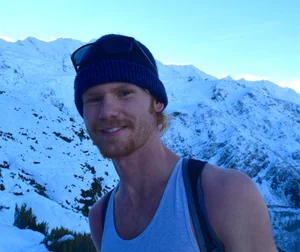
Teddy Dondanville is a freelance writer focused on the outdoor industry and adventure sports. When not enjoying the cerebral and caffeine-fueled pursuits of writing, he works as a rock climbing guide in upstate New York. You can learn more about Teddy on his website.